
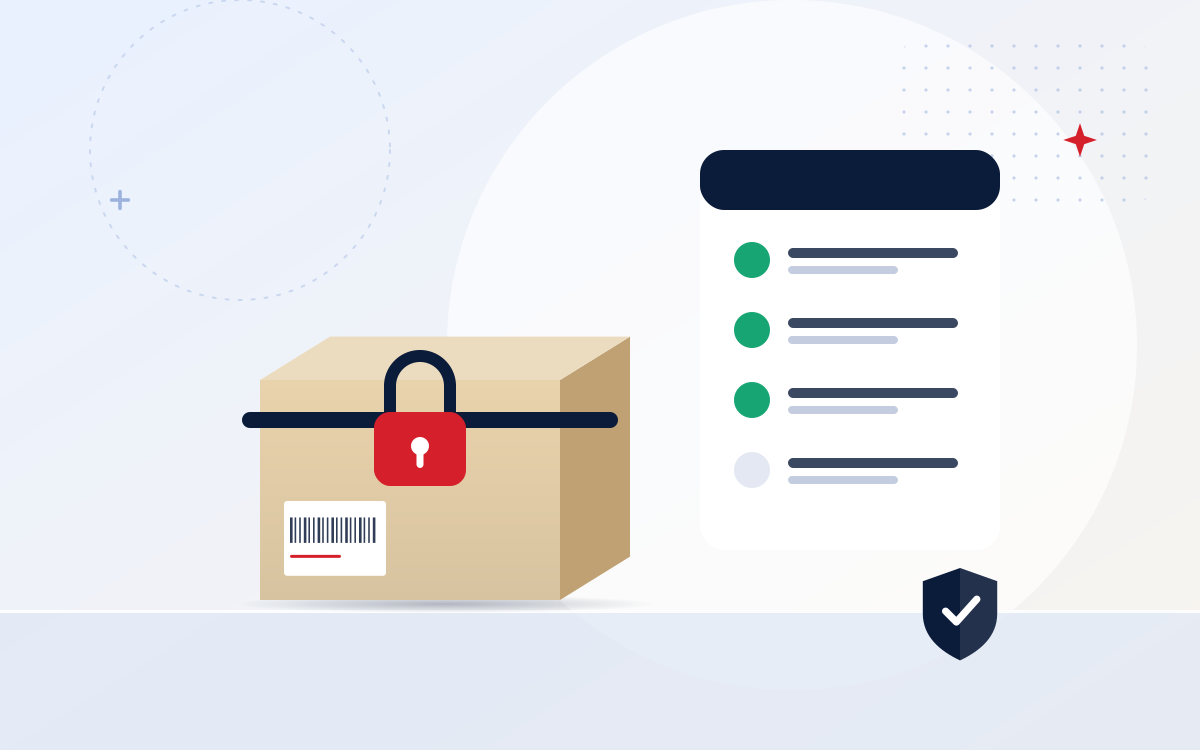
Chain of custody is a documented, timestamped record of everyone who handled a shipment between pickup and final delivery. For a standard package, nobody asks for this. For legal evidence, signed contracts, or medical specimens, it's often the single most important part of the delivery, because it's what proves the item wasn't altered, swapped, or left unattended along the way.
What Chain of Custody Actually Documents
At its core, chain of custody answers three questions for every stage of a delivery: who had the item, when did they have it, and what did they do with it. A complete chain of custody record typically includes the name of the person who picked up the shipment, the exact pickup time, every point where the shipment changed hands, and a final, confirmed delivery with a signature or equivalent proof.
Pickup confirmation: Who collected the item, from where, and at what time.
Handoff tracking: Any point where custody transfers between couriers or vehicles, logged with a timestamp.
Delivery confirmation: Signature, photo, or scan proof that the item reached the correct recipient.
Why It Matters More for Some Shipments Than Others
A birthday card doesn't need a chain of custody. A piece of evidence being delivered to a courthouse does. The difference is what's at stake if the delivery is ever questioned.
- Legal documents and evidence: If a contract or piece of evidence is ever challenged in court, the party relying on it needs to show it was handled properly and wasn't tampered with. Our legal courier service builds this documentation into every delivery.
- Medical specimens and clinical samples: A lab result is only as trustworthy as the sample behind it. If there's a gap in the handling record, the sample's validity can be questioned, sometimes requiring the entire test to be repeated.
- High-value or regulated goods: Shipments with significant monetary or regulatory value benefit from the same documented accountability, both for insurance purposes and for proving compliance.
How a Courier Builds a Reliable Chain of Custody
A documented chain of custody isn't automatic; it has to be built into how the courier operates.
- Direct handling: Fewer handoffs mean fewer gaps. A courier who picks up and delivers the item personally, without routing through a depot or multiple vehicles, keeps the chain simple and easy to verify.
- Timestamped confirmations: Every stage, from pickup to delivery, should be logged with a time and, where appropriate, a signature.
- Secure handling procedures: Sealed packaging and clear handling instructions reduce the chance of a shipment being opened or altered without it being obvious.
- Accessible records: The sender should be able to request the chain of custody record after delivery, not just at the time of the shipment.
A chain of custody isn't paperwork for its own sake. It's what lets someone prove, after the fact, that a shipment can be trusted.
Common Chain of Custody Mistakes
- Relying on memory instead of records: "I'm sure it was fine" doesn't hold up if a delivery is ever formally questioned. Documentation does.
- Unnecessary handoffs: Every extra transfer point is another opportunity for a gap in the record.
- No delivery confirmation: A shipment that was dropped off without a signature or scan has an incomplete chain, regardless of how carefully it was handled in transit.
Our Point of View
A chain of custody is only as strong as its weakest unrecorded handoff. We think the practical test is simple: for any point in the journey, can someone say who held the item, from when to when? If not, the chain has a gap, however good the tracking screen looks.
Where this advice stops: Chain of custody for evidence in a legal proceeding can carry specific rules. Follow your counsel's or your organisation's procedure; a courier's record supports it but does not replace it.
Frequently Asked Questions
What is chain of custody in courier delivery?
Chain of custody is a documented record of everyone who handled a shipment from pickup to delivery, including timestamps for each handoff. It proves a package wasn't altered, opened, or left unattended during transport.
Why does chain of custody matter for legal documents?
For evidence, contracts, and court filings, chain of custody establishes that a document is authentic and unaltered. If a delivery is ever challenged, a documented chain of custody shows exactly who handled it and when.
How do couriers document chain of custody?
Typically through signed pickup and delivery confirmations, timestamped scans at each handoff point, and in some cases photo or signature proof of delivery. The specific method depends on how sensitive the shipment is.
Is chain of custody only relevant for legal shipments?
No. Medical specimens, clinical trial materials, and high-value or regulated goods also depend on a documented chain of custody to prove the shipment was handled properly and wasn't compromised in transit.
What happens if chain of custody is broken during delivery?
A broken chain of custody, meaning a gap in documentation or an unaccounted handoff, can make a legal document inadmissible as evidence or a medical specimen unusable, since there's no longer proof it wasn't tampered with or mishandled.
Conclusion
Chain of custody is what turns "we delivered it carefully" into something that can actually be proven. For law firms, healthcare providers, and any business handling sensitive or regulated shipments, working with a courier that documents every handoff isn't an extra service, it's the point of hiring a professional courier instead of using standard mail.
At Rush Expedited Courier, every sensitive delivery includes proper handling and delivery confirmation from pickup to drop-off. Request a quote for your next time-critical or sensitive shipment, or read more about our courier services.
See also: sending original documents by courier, courier support for accounting firms in tax season, how to prepare a shipment for courier pickup, tamper-evident packaging for courier shipments, delivering electronic evidence and storage media and delivery verification by signature, ID check, photo, or code.